

Quick answer
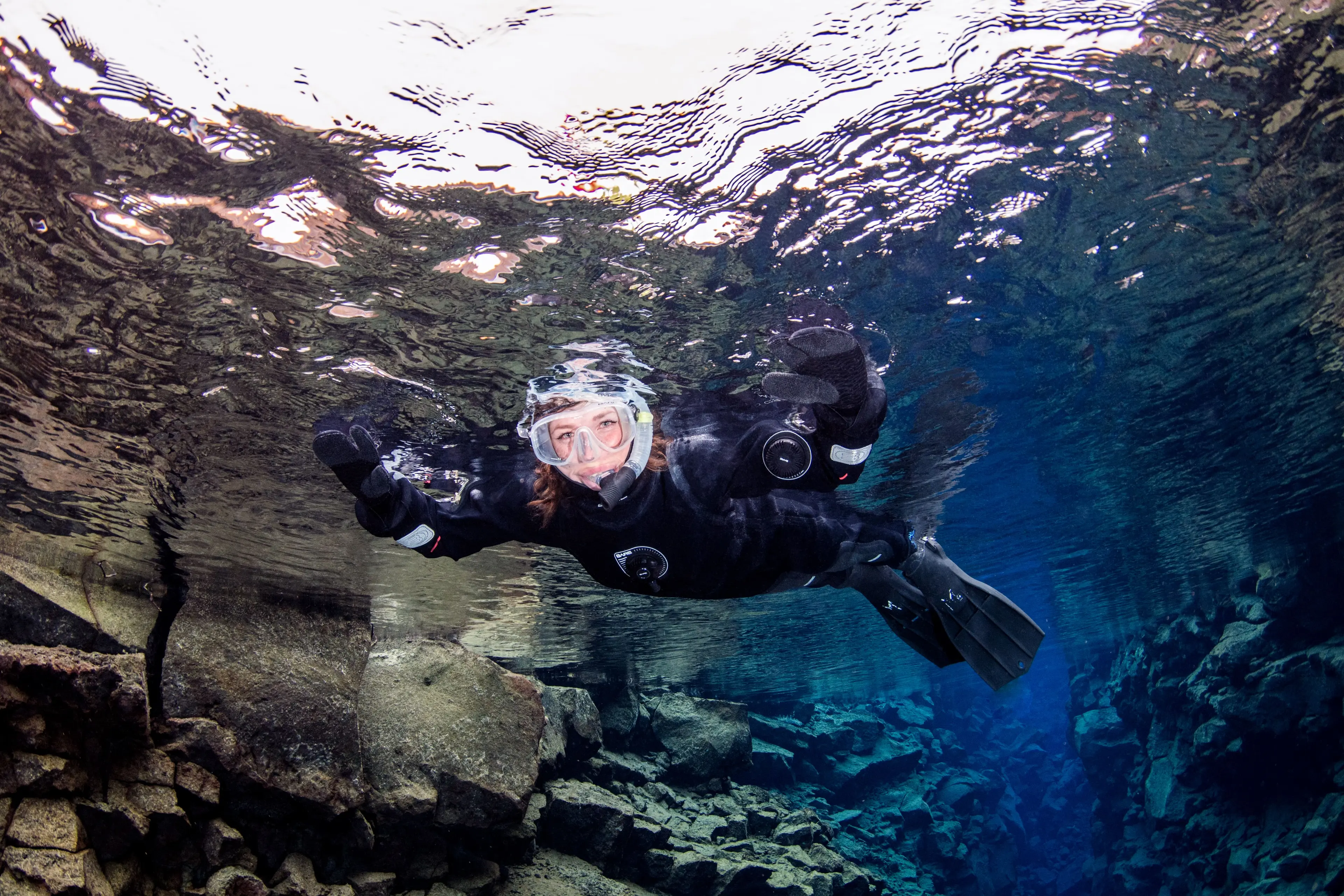
All Silfra snorkelers wear a drysuit provided by tour operators, keeping you dry and thermally insulated in water that hovers at 2-4°C year-round. Under the drysuit you'll need thermal base layers—long underwear that covers arms and legs—plus thick wool or synthetic socks. Tour operators supply the drysuit, hood, mask, snorkel, fins, and gloves; you bring the warm layers underneath and meet minimum fit requirements to ensure the suit seals properly.
Silfra sits at the seam of two continents, and its water temperature never rises above 4°C. The glacial meltwater filtering through porous lava rock for decades arrives crystal-clear and bone-cold, which means every snorkeler enters the fissure inside a neoprene drysuit. This is not optional. The water is cold enough to cause hypothermia in minutes without thermal protection, and tour operators will not permit anyone to snorkel in a wetsuit or without proper insulation. Understanding what to wear snorkeling Silfra begins with the drysuit system itself—a sealed rubber suit that keeps water out entirely, trapping a layer of air against your body for insulation. The drysuit is provided, but what you wear underneath determines whether you stay warm or spend the dive shivering. Tour operators require a full thermal base layer: long-sleeved top and full-length leggings made from merino wool, synthetic fleece, or a similar insulating fabric. Cotton is explicitly prohibited because it retains moisture and loses all insulating value when damp. You'll also need thick socks—wool hiking socks or thermal ski socks—because your feet will be inside neoprene boots with minimal insulation. Over your base layers, some operators recommend an additional fleece or wool mid-layer if you run cold, though this can make the drysuit fit tighter. The suit itself is bulky and restrictive, so mobility is already limited; adding too many layers can make it difficult to move your arms freely or achieve neutral buoyancy in the water. Beyond the base layers, you'll wear a neoprene hood that seals around your face, leaving only your eyes, nose, and mouth exposed. The hood is not negotiable—your head loses heat faster than any other part of your body, and even a few minutes with an uncovered scalp in 2°C water will leave you dangerously cold. Tour operators also provide neoprene gloves, though your hands will still feel the cold; the gloves are three-fingered mitts designed to maintain some dexterity while gripping the guideline that runs along the snorkel route. Fins, mask, and snorkel complete the kit, all provided and fitted on-site. The mask must seal tightly against the hood, and guides will check the fit before you enter the water. There are physical and sizing requirements that determine whether you can wear the drysuit at all. Operators require a minimum height—typically 150 cm—and a minimum weight, usually around 45 kg, because smaller individuals cannot achieve a proper seal at the neck and wrists. The suit must fit snugly enough to prevent water infiltration but not so tight that it restricts breathing or circulation. If you fall outside the sizing range, you will not be permitted to snorkel, and there are no exceptions. The drysuit also requires a basic level of comfort in confined gear; if you experience claustrophobia or anxiety in tight-fitting equipment, the combination of hood, gloves, and sealed rubber suit can be overwhelming. What you bring to the site matters as much as what you wear in the water. After the snorkel, you'll exit the water cold and damp from condensation inside the suit, even though you stayed dry. Bring a complete change of warm, dry clothing—thermal layers, a heavy fleece or down jacket, wool hat, and insulated footwear—because you'll need to warm up immediately. The changing facilities at Silfra are basic: a small trailer with benches and minimal heating. Many snorkelers bring a thermos of hot tea or coffee to drink immediately after the dive, and this is one of the most effective ways to restore core temperature quickly. The air temperature at Thingvellir can drop below freezing even in summer, and the wind across the open plateau amplifies the chill. Snorkeling Silfra is a cold-water experience that demands preparation. The visibility and geology make it worth the discomfort, but only if you come prepared with the right layers, realistic expectations about the cold, and a full set of dry clothes waiting on shore.
“The water is cold enough to cause hypothermia in minutes without thermal protection, and tour operators will not permit anyone to snorkel in a wetsuit or without proper insulation.”
Essential Gear and What to Wear Snorkeling Silfra
Prepare for glacial water conditions with the right thermal layers and documentation well before your dive.
-
Book your guided snorkeling tour — Entry to the fissure requires a certified guide and advance reservation.
-
Confirm medical clearance requirements — Operators require a signed health declaration; certain conditions may need physician approval.
-
Pack long thermal base layers — You'll wear thick fleece or wool underwear under the drysuit in 2–4°C water.
-
Bring thick wool or fleece socks — Standard socks won't insulate against glacial temperatures during your 30–40 minute swim.
-
Arrive with dry hair — Wet hair before suiting up accelerates heat loss at the exposed head and neck seal.
-
Wear contact lenses if you need vision correction — Prescription masks aren't available, and glasses won't fit under the provided hood.
Timing Your Visit and What to Wear Snorkeling Silfra
The best arrival window for snorkeling Silfra is 09:00–11:00 to avoid peak crowds and ensure quieter access to the site. Your thermal layering needs remain consistent year-round, as the water temperature stays between 2°C and 4°C regardless of the season.
Weekday mornings
Minimal—
Arrive early for the quietest experience on the platform.
May to August
HighAverage 10°C to 15°C
Long daylight hours allow for flexible scheduling despite increased visitor volume.
September to October
ModerateAverage 5°C to 10°C
Cooler air temperatures increase the importance of wearing thermal base layers under your drysuit.
November to April
LowAverage -2°C to 4°C
Winter visits require extra thermal insulation for the time spent out of the water.
Verdict: For the quietest experience, visit on a weekday between 09:00 and 11:00 during the shoulder months of April or October.
Opening Hours for Those Planning What to Wear Snorkeling Silfra
The Silfra Fissure remains open for visitors throughout the entire week. These hours reflect the standard operating times for the area.
| Monday | 09:00–18:00 | |
|---|---|---|
| Tuesday | 09:00–18:00 | |
| Wednesday | 09:00–18:00 | |
| Thursday | 09:00–18:00 | |
| Friday | 09:00–18:00 | |
| Saturday | 09:00–18:00 | |
| Sunday | 09:00–18:00 |
Entrance Fees and Costs for What to Wear Snorkeling Silfra
Access to the Silfra Fissure is free of charge. However, regulations require all visitors to participate in a guided tour to snorkel, which includes the necessary drysuit equipment.
While the fissure entrance is free, travelers pay for guided tour packages that bundle the required drysuit gear and professional supervision.
Directions for Reaching the Site to Wear Snorkeling Silfra Gear
Silfra Fissure is located within Thingvellir National Park, approximately 50 kilometers from Reykjavik. The most direct approach is via private vehicle or pre-arranged tour transport along the designated road network.
Route 1 from Reykjavik to Route 36
Scheduled tour transport from Reykjavik
Check availability
Frequently asked questions about what to wear snorkeling Silfra
Everything you need to know about what to wear snorkeling silfra